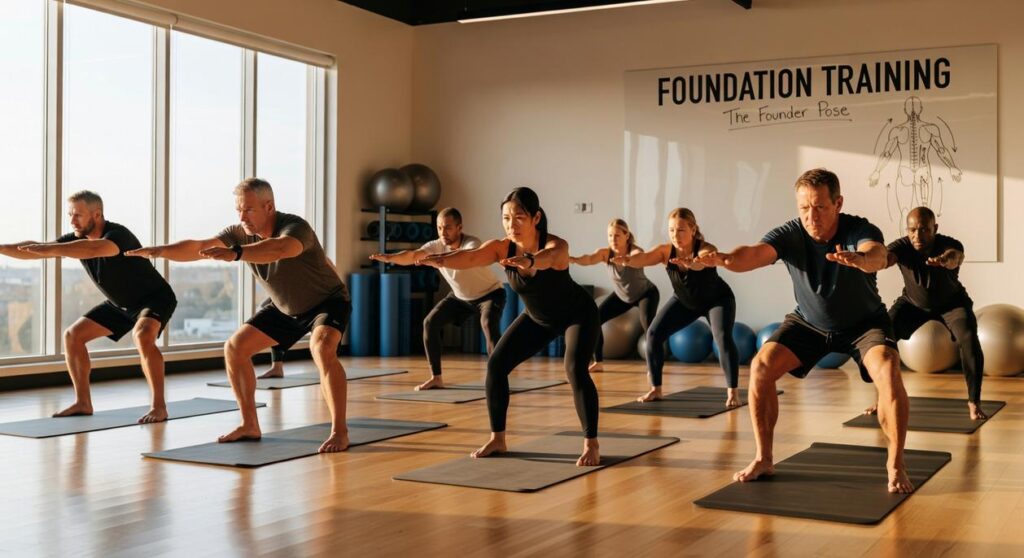
If you’re searching for practical ways to improve stability, coordination, and on-field performance, you’re in the right place. Athletes at every level are realizing that strength and speed mean little without control—and that’s where balance training for athletes becomes a true game-changer. Whether you compete in high-impact sports or precision-based disciplines, developing balance directly enhances agility, reduces injury risk, and sharpens reaction time.
In this article, you’ll discover how targeted balance work translates into better footwork, smarter movement patterns, and stronger overall body control. We break down the mechanics behind effective drills, explain how balance connects to team dynamics and tactical execution, and provide clear guidance you can apply immediately to your training routine.
Our insights are grounded in real-world athletic performance analysis, proven conditioning principles, and hands-on experience refining movement efficiency across competitive environments. By the end, you’ll understand not just why balance matters—but exactly how to train it for measurable results.
Unlock Your Athletic Potential: The Foundation of Stability and Coordination
Athletes often blame slow progress on strength or speed. However, plateaus usually stem from poor stability—the body’s ability to control movement—and weak coordination, meaning how efficiently muscles work together. Without these, power leaks (like a car with misaligned wheels).
Where to Start
First, prioritize balance training for athletes such as single-leg deadlifts, lateral hops, and stability ball holds. These sharpen joint control and neuromuscular awareness. Next, add agility ladder drills to improve timing and foot placement. Finally, incorporate controlled rotational core work to enhance force transfer. Consistency beats intensity—train smart, then build speed.
The Science of Balance: Why Stability is Your Secret Weapon
Stability and coordination often get lumped together, but they’re not the same thing. Stability is your ability to resist unwanted movement—think of it as your body’s internal brake system. Coordination is your ability to execute smooth, efficient movement—more like a well-timed orchestra than random noise.
Here’s where the neuromuscular system comes in. That’s the partnership between your brain and muscles. When you practice balance training for athletes, you’re teaching nerves to fire muscles in the right sequence. The result? FLUID power instead of jerky, energy-wasting motion (no more “newborn deer” moments).
Why does this matter?
• Stable joints absorb and distribute force safely.
• Ankles, knees, and hips stay aligned under pressure.
Some argue strength alone prevents injury. But without CONTROL, strength leaks. A stable base protects joints and boosts power output, accuracy, and endurance. Think of it as upgrading your operating system—not just the hardware.
Building Your Base: Essential Stability Exercises
Great movement starts with not wobbling like a folding chair at a family barbecue. Stability is your foundation—the ability to control joint position and resist unwanted movement. In other words, staying solid when your body really wants to flail.
Single-Leg Stance Variations
Start with a basic single-leg hold: stand tall, foot rooted, hips level. Keep your knee softly bent and your gaze forward. Form matters more than time (this isn’t a staring contest with the wall).
Progressions:
- Close your eyes to challenge proprioception—your body’s awareness of where it is in space.
- Stand on a cushion or pad to introduce an unstable surface.
This sequence is gold for balance training for athletes, especially those cutting, landing, or changing direction.
The Pallof Press
An anti-rotation exercise trains your core to resist twisting forces. Attach a resistance band at chest height. Stand perpendicular to the anchor, press the handle straight out, and hold briefly. Don’t let your torso rotate. If you look like you’re swatting a fly, reset and lighten the load.
Glute Bridge March
Lie on your back, hips lifted in a bridge. Slowly lift one foot, then alternate like a slow-motion march. This builds posterior chain strength—glutes and hamstrings—and pelvic stability crucial for running and jumping. If your hips sag, that’s your cue to regroup.
Bird-Dog with Resistance
From a tabletop position, extend opposite arm and leg. Loop a light band between them for added tension. This challenges cross-body stabilization patterns (think superhero pose, minus the cape).
Master these, and your body becomes the strong, steady base every powerful movement demands.
Dynamic Movement Mastery: Coordination Drills for Elite Athletes
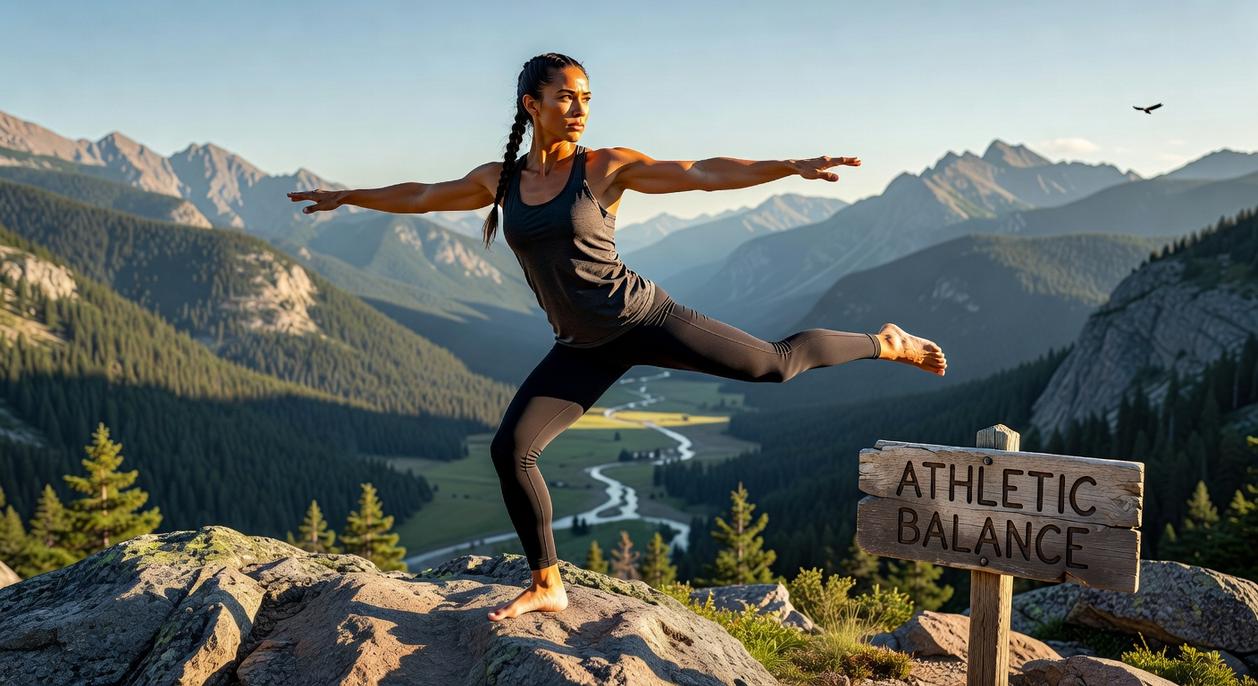
Elite coordination isn’t just about moving fast. It’s about sequencing—linking multiple body parts in the right order, at the right time. Let’s break down a few drills that clarify how this works in practice.
Ladder Drills go beyond straight-line speed. Patterns like the Ickey Shuffle (in-in-out foot rhythm) and Ali Shuffle (rapid alternating foot switches) challenge foot placement, timing, and posture simultaneously. In other words, the ladder becomes a tool for neuromuscular coordination—the brain-to-muscle communication that controls precise movement. Focus on light, quiet steps and controlled arm action (flailing helps no one).
Next, Medicine Ball Rotational Throws connect lower-body drive to upper-body power. Start in an athletic stance, rotate your hips first, then your torso, and finally release the ball against a wall. This sequence—called kinetic chain activation—matters in sports like baseball or tennis where power begins from the ground up. If the hips fire late, energy leaks (and so does performance).
Then there’s the Box Jump with Stabilization. Jump explosively, land softly, and hold the position for 2–3 seconds. That pause trains deceleration, which is your ability to absorb force safely. This is where balance training for athletes becomes practical, not theoretical.
Finally, Reactive Mirror Drills sharpen unpredictability. One partner leads, the other mirrors instantly. Because reactions aren’t preplanned, this drill directly enhances decision speed. For deeper insight, explore reaction time drills for faster on field decisions.
Together, these drills transform raw athleticism into controlled, game-ready movement.
Beyond the Basics: Proprioception and Agility Training
What Is Proprioception?
Proprioception is your body’s “sixth sense”—its ability to know where your limbs are in space without looking. Close your eyes and lift your arm; you still know it’s raised. That awareness comes from specialized nerve receptors in muscles and joints. More importantly, it’s your built-in injury alarm system. A well-trained proprioceptive system helps prevent ankle rolls and knee injuries by triggering rapid, protective muscle responses (often in milliseconds). In other words, you stay upright when others stumble.
Exercises to Enhance Proprioception
So how do you sharpen it? Start with balance training for athletes: stand on a wobble board, perform single-leg hops in multiple directions, or catch a ball while balancing on one foot. These drills challenge stability and coordination simultaneously. Over time, your reactions become automatic (think Spider-Man reflexes, minus the spandex).
The Agility Component
As a result, improved proprioception fuels true agility—the ability to land safely, cut instantly, and stay balanced during chaotic plays. The payoff? Faster reactions, fewer injuries, and confident, catlike movement under pressure.
From Practice to Peak Performance: Making Stability Your Instinct
You now have a roadmap. But here’s the honest part: no one can guarantee how quickly your body will adapt. Some athletes feel changes in weeks; others take longer (frustrating, I know). What’s clear is that a weak foundation raises injury risk and caps performance.
These drills don’t just build muscle—they retrain your nervous system for sharper, more efficient movement. Think of it as upgrading your internal wiring.
- Add balance training for athletes to reinforce joint control.
- Focus on slow, precise reps before speed.
- Track small stability wins each session.
Start with two or three exercises this week. Let consistency—not intensity—drive progress.
For athletes looking to improve their agility and quick direction changes, incorporating balance training exercises can be a game changer, much like the strategic precision showcased in Hmcdgaming Esports Gaming From Harmonicode.
Take Your Performance to the Next Level
You came here looking for a smarter way to sharpen your edge, improve coordination, and build a body that reacts with precision under pressure. Now you understand how agility work, tactical awareness, and balance training for athletes come together to create faster reactions, stronger stability, and better overall performance.
The reality is this: talent alone isn’t enough. If your footwork feels slow, your stability breaks under contact, or your movements lack control, you’re leaving performance on the table. Small weaknesses in balance and coordination often become the difference between winning and falling short.
The next step is simple—commit to structured, sport-specific drills that reinforce control, reaction speed, and body awareness every single week. Don’t just train harder. Train smarter.
If you’re ready to eliminate instability, sharpen your movement, and perform with total confidence, start implementing a focused agility and balance system today. Thousands of driven athletes are already upgrading their training approach—now it’s your move.
 Ask Norman Wilsonaivos how they got into athletic tactics and techniques and you'll probably get a longer answer than you expected. The short version: Norman started doing it, got genuinely hooked, and at some point realized they had accumulated enough hard-won knowledge that it would be a waste not to share it. So they started writing.
What makes Norman worth reading is that they skips the obvious stuff. Nobody needs another surface-level take on Athletic Tactics and Techniques, Beauty Buzz, Beauty Product Optimization Tips. What readers actually want is the nuance — the part that only becomes clear after you've made a few mistakes and figured out why. That's the territory Norman operates in. The writing is direct, occasionally blunt, and always built around what's actually true rather than what sounds good in an article. They has little patience for filler, which means they's pieces tend to be denser with real information than the average post on the same subject.
Norman doesn't write to impress anyone. They writes because they has things to say that they genuinely thinks people should hear. That motivation — basic as it sounds — produces something noticeably different from content written for clicks or word count. Readers pick up on it. The comments on Norman's work tend to reflect that.
Ask Norman Wilsonaivos how they got into athletic tactics and techniques and you'll probably get a longer answer than you expected. The short version: Norman started doing it, got genuinely hooked, and at some point realized they had accumulated enough hard-won knowledge that it would be a waste not to share it. So they started writing.
What makes Norman worth reading is that they skips the obvious stuff. Nobody needs another surface-level take on Athletic Tactics and Techniques, Beauty Buzz, Beauty Product Optimization Tips. What readers actually want is the nuance — the part that only becomes clear after you've made a few mistakes and figured out why. That's the territory Norman operates in. The writing is direct, occasionally blunt, and always built around what's actually true rather than what sounds good in an article. They has little patience for filler, which means they's pieces tend to be denser with real information than the average post on the same subject.
Norman doesn't write to impress anyone. They writes because they has things to say that they genuinely thinks people should hear. That motivation — basic as it sounds — produces something noticeably different from content written for clicks or word count. Readers pick up on it. The comments on Norman's work tend to reflect that.