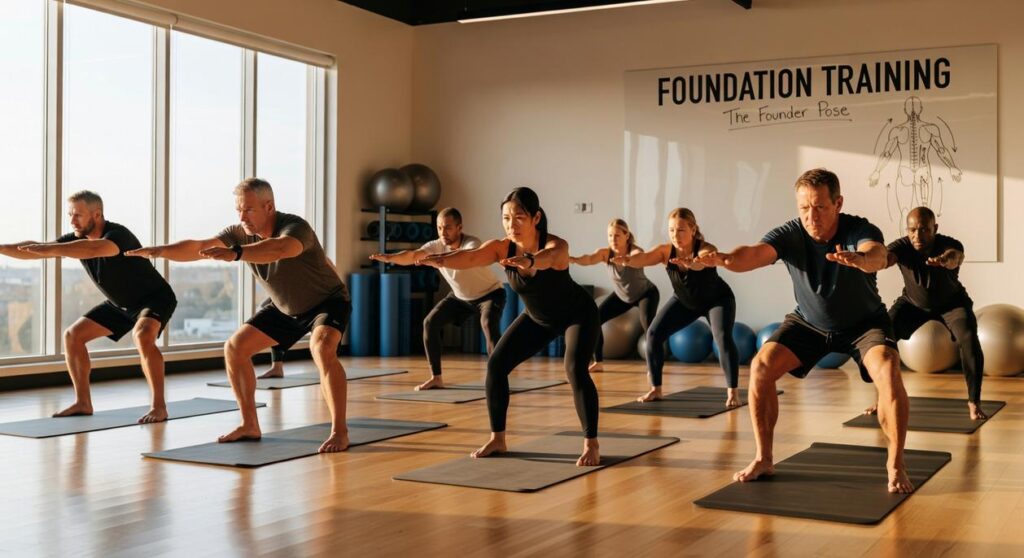
If you’re looking to sharpen your speed, coordination, and on-field decision-making, you’re in the right place. Athletes today need more than raw strength—they need precision footwork, sharp tactical awareness, and the kind of controlled explosiveness that separates good players from game-changers. This article breaks down how targeted movement training, including agility ladder drills, can elevate your performance, strengthen team dynamics, and translate directly into competitive advantage.
We draw on proven athletic methodologies, current sports performance research, and insights from experienced coaches who work with competitive athletes across multiple disciplines. You’ll learn how structured agility work improves reaction time, balance, and spatial awareness—while also supporting smarter tactical execution during real match scenarios.
Whether you’re refining your individual skills or looking to contribute more effectively to your team’s strategy, this guide delivers practical, field-tested techniques you can apply immediately.
Train With Precision
Mastering speed starts with technique. Many athletes rush agility ladder drills, but precision creates measurable gains in acceleration, balance, and reaction time. An agility ladder typically spans 15 to 30 feet with evenly spaced rungs, forcing rapid foot placement and neural adaptation. That structure improves proprioception, your body’s awareness in space (think of a cat landing silently).
Focus on:
- Light, quick ground contacts
- Forward chest position
- Controlled arm drive
Some argue ladders do not build true speed. They are right partly; sprint mechanics matter more. Yet ladders sharpen coordination, making strides cleaner and game-ready.
Why the Ladder Works: The Science of Quick Feet
I still remember the first time I added agility ladder drills to my offseason routine. I thought it would just make me faster. Instead, it made me sharper. My cuts felt automatic, like my feet were thinking before I did (which, in a way, they were).
Brain-Body Connection
The ladder trains the central nervous system (CNS)—the control center that tells your muscles when and how fast to fire. Each precise step forces rapid signaling between brain and body. Studies show coordinated footwork improves motor unit recruitment and reaction time (Behm & Sale, 1993). In simple terms: your brain gets better at sending clean, quick instructions.
Proprioception and Body Awareness
Proprioception—your awareness of body position—improves as you target each square. Miss a step, and you know immediately. That constant feedback sharpens balance and may reduce injury risk (McKeon & Hertel, 2008).
Foundation of Athleticism
Quick feet underpin nearly every sport. Soccer cuts, basketball drives, tennis recoveries—they all start from the ground up. Pro tip: master control before speed.
Foundational Drills: Building Your Base
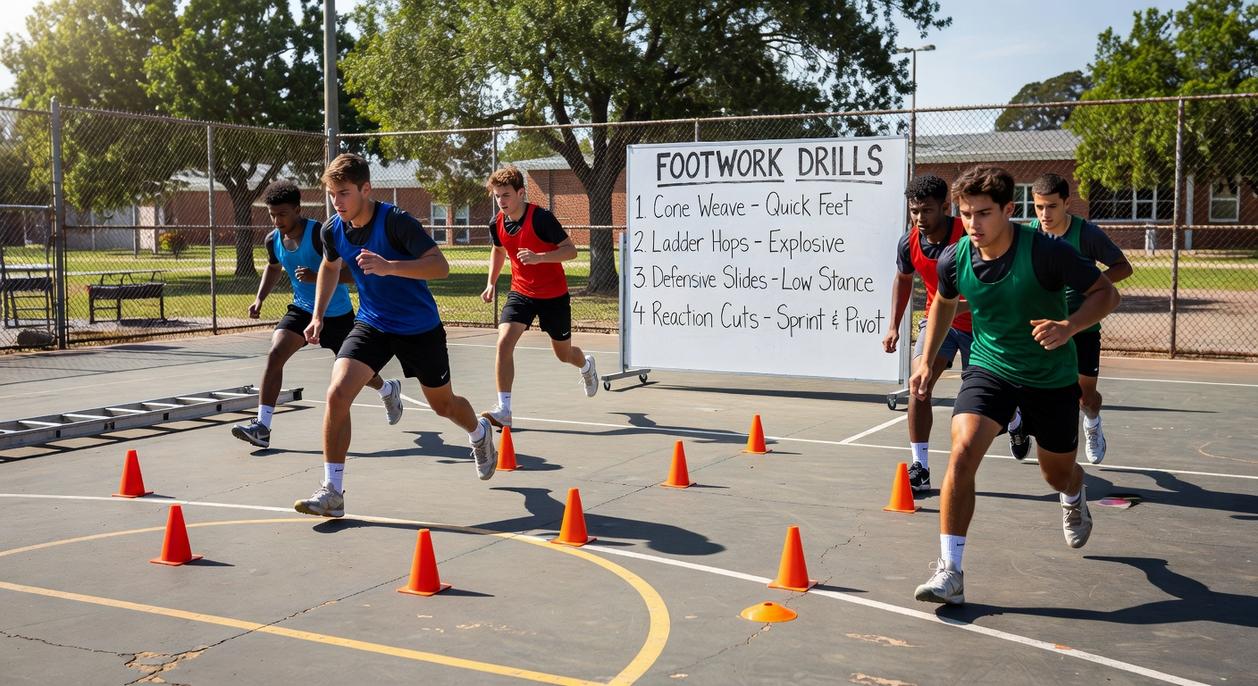
Every explosive cut, sprint, or defensive shuffle starts with a solid base. These foundational drills are designed to build muscle memory—your body’s ability to perform movements automatically without conscious thought. When form becomes automatic, speed follows (and injuries decrease).
The key? Precision over pace. Slow it down now so you can fly later.
Drill 1: Linear Single-Foot In Each Square
Step into the first square with one foot, then the next square with the opposite foot, continuing one foot per square down the ladder. Keep your knees high, land on the balls of your feet, and maintain light, quick контакts with the ground.
What’s in it for you? Improved coordination, sharper acceleration mechanics, and stronger ankle stability. This drill lays the neurological groundwork for more advanced agility ladder drills later on. Pro tip: keep your eyes forward, not on your feet—trust your rhythm.
Drill 2: Linear Two-Feet In Each Square
Now progress to two feet in every square: right-left, right-left, repeating the rhythm down the ladder. Pump your arms aggressively—your upper body drives momentum more than most athletes realize.
The benefit is clear: faster turnover, better sprint mechanics, and improved cardiovascular conditioning. Think of it like upgrading from a steady jog to quick-twitch mode (your nervous system loves this challenge).
Drill 3: Lateral High-Knee
Face forward, move sideways. Step laterally through each square with high knees while keeping hips and shoulders square. Avoid rotating your torso.
This builds lateral quickness, hip stability, and change-of-direction control—the traits that separate reactive athletes from reactive spectators. Master these basics, and your movement foundation becomes unshakable.
Intermediate Patterns: Enhancing Coordination
I still remember the first time my footwork finally clicked. What felt clumsy and forced suddenly turned rhythmic—like learning the basic steps to a dance and then adding flair. Once foundational agility ladder drills become automatic, it’s time to layer in complexity.
Drill 1: The Ickey Shuffle
The Ickey Shuffle follows a simple three-count rhythm: “in-in-out.”
- Step one foot in the square.
- Step the other foot in (hips stay low).
- Move the first foot out laterally to the next square.
Repeat down the ladder.
The magic is in the lateral movement. Your hips rotate slightly as you exit the square, mimicking how you’d cut around a defender (think quick slot receivers slicing through coverage). Some argue this drill is overused. Maybe. But when done with sharp hip rotation and tight arm drive, it reinforces real-game angles.
Drill 2: In-Out (Straddle Hops)
Start with feet together inside the square. Hop explosively so your feet land outside the square. Then rebound back inside.
It’s a quick in-out, in-out rhythm.
Focus on minimal ground contact—imagine the floor is hot. This builds reactive strength, a key principle in plyometric workouts that boost explosive movement.
Pro tip: Stay on the balls of your feet and keep your chest tall to maintain balance and speed.
These complex drills are built for athletes who have already mastered the fundamentals and now crave a sharper edge. First, the Ali Shuffle demands lightning-fast footwork while staying on the balls of your feet. Keep a low center of gravity and let your hips glide as your feet tap in a rapid in-and-out rhythm. At first, it feels chaotic (like trying to outdance your shadow), yet that chaos trains reaction speed and balance under pressure. As a result, you develop explosive acceleration and sharper change-of-direction control.
Next, Scissor Kicks challenge single-leg stability through a forward-and-back scissoring motion inside each square. Because one foot drives while the other stabilizes, your ankles and core must coordinate seamlessly. Consequently, your stride becomes efficient and resilient against fatigue or missteps.
When layered into advanced agility ladder drills, these patterns sharpen cognitive processing and timing. Ultimately, you gain quicker decision-making, tighter foot placement, and confidence.
Proper technique is the difference between effective training and wasted time. First, avoid looking down. When your head drops, your spine follows, limiting awareness and slowing reaction time. Keeping your eyes up mirrors real game conditions and sharpens decision-making in motion. Next, loosen that stiff upper body. Powerful, coordinated arm swings drive leg turnover and stabilize balance—think of how elite sprinters move, smooth and rhythmic (not robotic like a video game glitch). Then, ditch heavy feet. Train as if you’re on hot coals, minimizing ground contact to boost speed and elasticity. Drills like agility ladder drills reinforce precision while building explosive control.
You now have the exercises to build elite speed and coordination. Random drills yield random results. The fix is simple: schedule a 10-minute block of agility ladder drills into your warm-up 2-3 times per week. Consistency compounds. I predict teams treating footwork like skill practice will dominate future play outcomes.
To maximize the benefits of agility ladder drills for enhancing speed and coordination, it’s also essential to ensure your athletic footwear is in top condition, which you can learn more about in our article on how to properly clean and store your gear – for more details, check out our How to Properly Clean and Store Athletic Footwear.
Take Your Agility to the Next Level
You came here to sharpen your speed, tighten your footwork, and build the kind of explosive control that separates average athletes from game-changers. Now you understand how focused movement patterns, smart recovery, and structured agility ladder drills work together to improve reaction time, coordination, and total-body control.
The real frustration isn’t a lack of effort — it’s training hard without seeing measurable improvement. When your cuts feel slow or your balance breaks under pressure, it costs you plays, confidence, and momentum. The right drills, executed consistently and correctly, eliminate those weak links.
Here’s your next move: commit to a structured agility plan and refine your technique every session. If you want proven tactics, gear guidance, and performance insights trusted by serious athletes, dive deeper into our training resources now. Don’t let slow footwork hold you back — start building sharper, faster movement today.