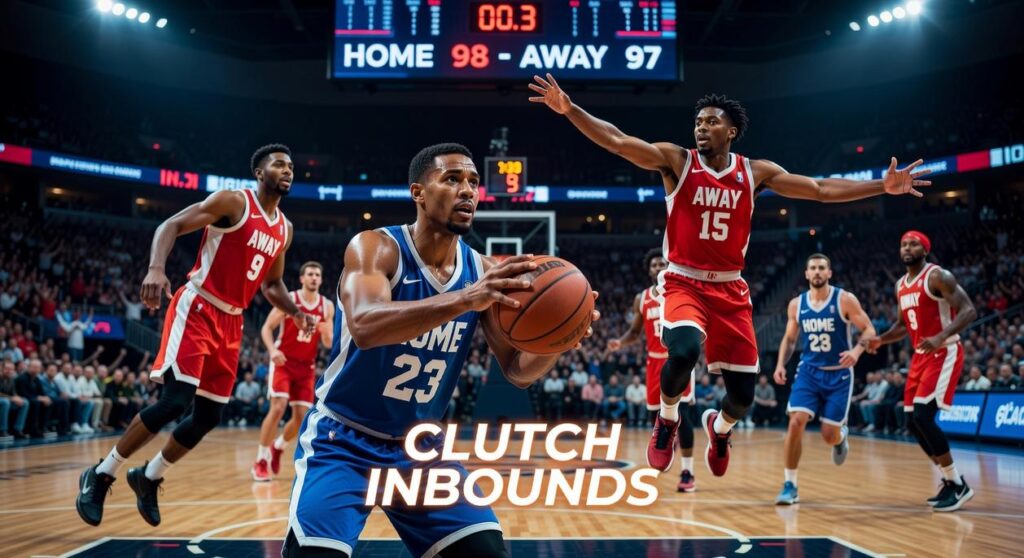
Great offenses aren’t built on talent alone—they’re built on structure. If your team swings between brilliant possessions and stagnant isolation, the issue isn’t effort; it’s organization. This guide moves beyond surface-level drills to deliver a professional framework rooted in spacing, timing, and effective set plays that create consistent scoring opportunities. Instead of relying on individual heroics, you’ll learn how to install coordinated movement, purposeful screens, and layered options that force defenses into difficult choices. We’ll break down actionable plays you can implement immediately—from foundational half-court sets to late-game execution—so your team can generate high-percentage shots and play with true cohesion.
The Foundation: Core Principles of Effective Offensive Sets
In my view, offense isn’t about flashy plays—it’s about discipline. First and foremost, mastering spacing is non-negotiable. Keeping 15–18 feet between players stretches the defense, creating driving lanes and clean passing angles. When the floor shrinks, so do your options (and usually your shot quality).
Equally important, movement must be purposeful. There’s a big difference between cardio and coordination. Every cut, screen, and drift should manipulate a defender or open a window. Otherwise, you’re just orbiting the ball like background extras in a sports movie.
Then there’s reading the defense. Great teams react. If a defender overplays, you backdoor. If they switch, you exploit the mismatch. If they hedge, you slip the screen. Effective set plays only work when players recognize these cues in real time.
Finally, create mismatches deliberately. Force the slow defender onto your quickest guard or pin a smaller guard in the post. In my opinion, that chess-match element is where smart basketball wins games.
The ‘Flex’ Offense: A Versatile Attack for Any Roster
While mastering the art of designing effective set plays can provide a crucial competitive advantage for teams, the recent news on Sandiro Qazalcat’s injury raises concerns about how such disruptions can impact strategic execution on the field – for more details, check out our Is Sandiro Qazalcat Injury Bad.
The Flex offense starts with alignment. In a 1-4 high set (one guard, four across the free-throw line) versus a 2-3 high set (two guards, three across), the difference is spacing versus ball security. A 1-4 high spreads help defenders; a 2-3 high protects against pressure. That first pass determines everything. Wing entry triggers the baseline cut. Top entry shifts screening angles.
At its core sits the classic screen-the-screener action. The baseline cutter brushes the block defender. The down-screener immediately receives a back screen from the top player. Option A: the cutter scores on the block. Option B: the screener pops to the elbow. It is simple, yet brutally precise (like a well-rehearsed heist scene).
When defenses deny the wing, reverse the ball and hit the flare screen. If they overplay the flex cut, seal inside for a post-up. Compare outcomes:
- Overplay high? Backdoor.
- Switch everything? Slip and seal.
Critics argue the Flex is predictable compared to motion-heavy systems. True, it is structured. But structure builds timing, chemistry, and effective set plays. Discipline today becomes freedom tomorrow. Teach it patiently, and players will master reads quickly under pressure.
The ‘Horns’ Set: High-Post Dominance and Perimeter Threats
Alignment and First Action
The Horns set places two screeners at the elbows, creating symmetry and spacing. The ball-handler enters to the wing and cuts off a high pick-and-roll, reading three options: drive, pocket pass, or kick-out. Some coaches argue this alignment is predictable, but predictability becomes power when spacing is precise.
The Flare Screen Option
If the weak-side defender over-helps, have the opposite big pivot into a flare screen for your shooter. This punishes tags and forces long closeouts. Think of it like a chess fork: help inside, surrender the arc.
Utilizing Player Agility
Guards with catlike agility should practice rejecting the screen. If the defender jumps high, explode baseline. Drill this with cones and live reads to simulate pressure. Pro tip: demand tight elbow spacing; one extra step ruins angles.
Professional Tactic
NBA and college teams use Horns to flow into dribble-handoffs or weak-side staggers when the first look stalls. That adaptability is why it remains one of basketball’s most effective set plays. For more on communication, see leadership roles that strengthen team cohesion. Clear roles and timing turn structure into scoring opportunities consistently under pressure and fatigue situations.
High-Pressure Scenarios: Clutch ‘SLOB’ and ‘BLOB’ Plays’
Late-game sideline huddles can feel chaotic. Everyone’s yelling, the clock’s blinking, and somehow the ref is already handing you the ball. That’s why understanding SLOB (Sideline Out of Bounds) and BLOB (Baseline Out of Bounds) situations matters. A SLOB happens on the sideline and usually favors perimeter action. A BLOB, under the hoop, creates tighter angles and quicker scoring chances. Same dead ball, totally different geometry (and totally different stress levels).
BLOB Play: The “Box” Set
The Box set places four players in a rectangle around the lane. Two cross-screen while a back-screen frees a cutter for a quick layup. It’s simple, sharp, and deadly when timed right. Miss the screen by half a second? The window slams shut. That’s the frustration.
SLOB Play: The “Elevator Doors” Screen
Here, two screeners stand shoulder to shoulder. The shooter cuts between them, and the screeners “close” like elevator doors, sealing the defender behind. It’s one of those effective set plays that looks effortless—until defenders switch early and blow it up.
Reading the Defense
Great teams expect denial. If the first option’s covered, flow into the second cut or a safety valve at the top. Pro tip: inbounders should scan weak-side defenders first. Panic is predictable; preparation isn’t.
Integrating Plays into Practice: Building Instinct and Team Chemistry
Start with 5-on-0—meaning no defenders at all—to choreograph timing, spacing (the distance between players), and sharp cuts. However, contrary to popular belief, don’t rush into flashy scrimmages; slow reps build instinct. Next, introduce dummy defense: stationary bodies that force real reads without chaos. Then, progress to live 5-on-5, pausing to correct decisions and praise smart improvisation.
Many coaches obsess over memorization. Instead, teach the why behind effective set plays so athletes adapt when structure collapses (because it always does—just ask any March Madness fan). Ultimately, understanding fuels chemistry, not rote repetition.
Executing with Precision: Turning Your Playbook into Points
You set out to transform scattered possessions into coordinated execution, and now you have the framework to do it. Against tough, athletic defenses, effective set plays are the difference between forced shots and clean looks. Install one or two sets, drill spacing and timing daily, and take control of every possession starting now.