
If you’re looking to sharpen your competitive edge, it’s not just about working harder—it’s about training smarter. This article dives into the athletic tactics, team dynamics, and agility strategies that separate consistent performers from the rest. Whether you’re refining footwork, improving on-field communication, or building explosive, catlike agility, you’ll find practical guidance designed to translate directly into results.
We’ve consulted experienced coaches, performance trainers, and equipment specialists to ensure every recommendation reflects what actually works in real training environments—not just theory. Beyond movement and mindset, we also cover gear longevity and cleaning athletic footwear so your equipment supports your performance instead of holding it back.
By the end, you’ll have a clearer understanding of how tactical awareness, cohesive teamwork, disciplined maintenance, and targeted agility drills come together to elevate your overall athletic performance.
Why Your Shoes’ Hygiene is a Secret Performance Weapon
Most athletes obsess over macros and mileage but ignore what’s underfoot. That’s a mistake. Dirty shoes harbor bacteria and fungi that increase odor and infection risk (American Podiatric Medical Association). More subtly, grime breaks down midsoles and outsoles, reducing energy return and traction.
Some argue shoes are “meant to get dirty.” True—but neglect accelerates material fatigue. Cleaning athletic footwear isn’t cosmetic; it preserves structure and responsiveness.
A simple system gives you an edge:
- Daily air-dry and insole removal
- Weekly surface wipe-down
- Monthly deep clean and deodorize
Pro tip: Rotate pairs to extend lifespan and maintain peak agility.
Immediate Action Is Key
The first 30 minutes after a workout are critical. Sweat, heat, and friction create the perfect storm for moisture buildup inside your shoes. That trapped moisture fuels bacteria, which leads to odor and long-term material breakdown (yes, even premium mesh and foam). Acting fast is your first line of defense.
Step 1: Loosen and Open
Unlace your shoes completely and pull the tongue forward to maximize airflow. This simple move increases ventilation, helping damp interiors evaporate faster. Think of it as cracking a window in a steamy room—small action, big impact.
Step 2: Remove Insoles
Take the insoles out and let them dry separately. Insoles absorb the most sweat, and leaving them inside creates a hidden breeding ground for microbes. Separating components improves circulation and extends cushioning life.
Step 3: The Quick Wipe-Down
Use a damp cloth to remove surface dirt from the upper and midsole before it sets. Consistent cleaning athletic footwear prevents stains from bonding to fibers.
The Don’ts:
- Never leave shoes in a gym bag or car trunk. Heat plus darkness accelerates bacterial growth and warps materials.
Pro tip: stuff shoes with paper towels to speed drying. Avoid direct sunlight.
The Deep Clean: A Step-by-Step Guide for Total Restoration
Just as mastering defensive techniques can elevate your game by shutting down high-scoring opponents, understanding how to properly clean and store your athletic footwear will ensure they perform at their best for as long as possible – for more details, check out our Defensive Techniques That Shut Down High-Scoring Opponents.
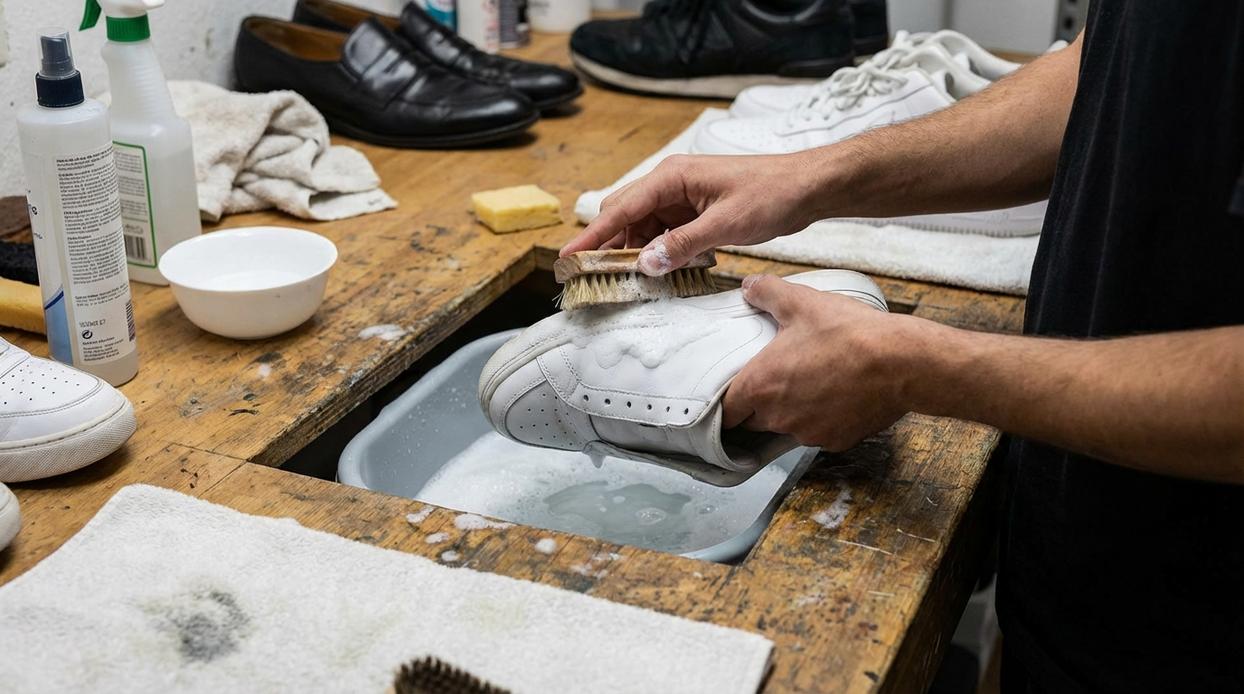
Deep cleaning isn’t something you do after every workout. Instead, aim for every 2–4 weeks, depending on how often you train. If you’re logging daily miles or grinding through muddy fields, lean closer to two weeks. I learned this the hard way after ignoring a month’s worth of grime—by then, stains had practically bonded with the fabric (and yes, they won that round).
Preparation Is Everything
First, remove the laces and insoles. Then, brush off loose dirt with a soft brush. Skipping this step was one of my early mistakes; once, I scrubbed wet mud straight into mesh, making it worse. Dry debris should always come off before water touches the shoe.
Hand-Washing Technique (Recommended)
Next, mix mild detergent with warm water. Mild detergent simply means a gentle soap without harsh chemicals that degrade materials. Using a soft brush or cloth, scrub uppers, midsoles, and outsoles.
For mesh (a breathable woven fabric), use light circular motions—too much pressure can fray fibers. For leather or synthetic uppers, use a damp cloth and avoid soaking. Over-saturation weakens adhesives that hold the shoe together (ask me how I know).
Machine Washing (The Cautious Approach)
If you must machine wash, place shoes in a mesh laundry bag, use cold water, minimal detergent, and a gentle cycle. However, heat and aggressive tumbling can damage glue and warp structure. One hot cycle once left my trainers looking like props from a post-apocalyptic movie.
Cleaning Laces and Insoles
Wash laces and insoles separately by hand. Insoles, especially, trap odor-causing bacteria (microorganisms that thrive in moisture).
The Crucial Drying Phase
Finally, air-dry only. Stuff shoes with newspaper or paper towels to absorb moisture and maintain shape. Keep them away from direct heat or sunlight.
Pro tip: Patience here prevents warping.
For more on extending the lifespan of protective sports equipment, prevention matters just as much as cleaning athletic footwear.
Winning the War on Odor: Advanced Tactics for Lasting Freshness
Understanding odor starts with biology. Sweat itself is mostly odorless; the smell appears when bacteria feast on sweat and dead skin cells, releasing pungent byproducts. Think of it like tiny uninvited dinner guests throwing a party in your sneakers. Stop the buffet, and you stop the funk.
Start with everyday deodorizers. After each wear, sprinkle baking soda inside and let it sit overnight to absorb moisture. Drop in specialized deodorizer balls or cedar inserts to wick dampness and neutralize odor. Consistency beats intensity. Pro tip: rotate pairs so each set dries for 24–48 hours.
You may have heard about the freezer trick. The theory is simple: cold temperatures kill bacteria. In reality, most household freezers only slow them down, and odors return once shoes warm up. It’s a temporary timeout, not a knockout.
For stubborn smells, mix equal parts white vinegar and water in a spray bottle, lightly mist interiors, and air-dry completely. Test on a small area first to avoid damage. Enzyme-based cleaners go further, breaking down organic residue at the source.
Finally, wear moisture-wicking athletic socks; they pull sweat away and support cleaning athletic footwear routines effectively daily.
Smart Storage: Protecting Your Investment Between Sessions
I learned this the hard way: I once left my favorite trainers in a sunlit garage, and within weeks the uppers turned brittle and yellowed. Ideally, store sports shoes in a cool, dry, well-ventilated area away from direct sunlight. UV rays and heat accelerate material breakdown, weakening adhesives and fading color. Meanwhile, cedar shoe trees help high-performance pairs maintain shape and absorb residual moisture after cleaning athletic footwear. In addition, rotating at least two pairs gives each 24–48 hours to dry and decompress, boosting performance and hygiene. Pro tip: loosen laces before storing.
A year ago, I ignored my post-game routine and paid for it with shoes that smelled like a forgotten gym locker. Since then, I have treated cleaning athletic footwear as seriously as stretching. First, I air them out immediately after workouts; next, I wipe and deodorize before bacteria settle in. Finally, I store them with inserts to maintain structure and absorb moisture. This layered system blocks odor, which means fewer microbes, or microscopic organisms causing infection. Some teammates say it is overkill. However, consistent care prevents premature wear and keeps my feet healthier, season after season. Start tonight; automate it.
Take Your Performance Further
You came here looking for practical, performance-driven guidance—and now you have a clearer path forward. From sharpening athletic tactics to improving team dynamics and building catlike agility, you’ve seen how small, consistent improvements create a serious competitive edge.
But here’s the truth: talent alone isn’t enough. Inconsistent training, overlooked fundamentals, and even poor gear care can quietly hold you back. Details matter. Whether it’s refining footwork or committing to cleaning athletic footwear to extend gear life and maintain grip, every choice impacts your performance.
Now it’s time to act. Apply one new tactical adjustment in your next session. Upgrade your agility routine. Inspect and maintain your gear before your next game. Momentum builds when you do.
If you’re ready to train smarter, move faster, and compete at a higher level, put these insights into practice today. Athletes who focus on the details win more often—start now and feel the difference in your next performance.